 Dana O'Driscoll
 By Dana O’Driscoll, Pennsylvania School of Herbalism. This post and all of our work is 100% human-produced.
The smell of cinnamon and nutmeg in your grandmother’s kitchen at Christmas. The smell of mint and chamomile from your morning daily tea. The smell of the lemon as you trim and lean your lemon-scented geranium on your windowsill. The smell of lemongrass and basil in your stir fry. The sweet orange smell coming from your friend’s essential oil diffuser. These are all great examples of aromatic herbs that are commonly experienced in our lives. In fact, aromatic herbs are one of the most important classifications of herbs for herbalism practice. Aromatic herbs are, as the name suggests—highly aromatic and with a strong smell that is usually pleasant and that we can clearly experience through our senses. The smell of Aromatic herbs comes from their volatile oils—oils in the plants themselves that are highly medicinal in nature. Essential oils and hydrosols are derived from these aromatic plants and are created through steam distillation. Aromatic herbs are one of our six foundational herbal actions in Traditional Western herbalism (along with bitter, astringent, demulcent, relaxant, and stimulant). In our first post on Aromatic herbs, we explored the medicine of the herbs and covered many of the most common and wonderful preparations you can make with aromatic plants. In this post, we will review how their medicine works on our bodies, explore what happens when we inhale aromatic oils, and also spotlight three of our favorite aromatic herbs!
Herbs and the Inhale
As you crush an aromatic herb in your hands and begin to smell it, your body responds in multiple ways to the volatile oils in the herb. As Sue Morris writes in Scents of Self: The Alchemical Blending of Aromatherapy, Astrology, and Botanical Perfumery, our noses have over 50 million smell receptors called “cilia,” which are part of our olfactory system (that is, our system of smell). These receptors are directly connected to the limbic system in our brain—and smell is the only sense that links directly to the limbic system. Limbic System in the oldest part of our brain, tied to our primitive senses and basic drives (instinct, needs, avoidances, fight, flight, fawn). This system is tied to our emotions, motivations, sexual arousal, and circadian rhythms. The Limbic system can control our heart rate, blood pressure, stress, hormones, emotions, and more, often through the release of hormones. We can encourage the system to release hormones–including serotonin, endorphins, and dopamine—by smell alone. In turn, these hormones can encourage sleep, lower anxiety, and reduce our perception of pain.
When we inhale, the volatile oils also can stimulate or relax our entire nervous system (brain, spinal cord, nerves throughout your body). As we continue to inhale, the volatile oils in aromatic plants also have a direct impact on our entire respiratory system through our noses, sinuses, throat, and lungs. Volatile oils can relax the bronchi in the lungs (our larger air passages) and the smaller alveoli in the lungs will absorb some of the volatile oil into the bloodstream.
In a review of over a decade of scientific research, Sattayakhol, Wichit, and Koomhin (2023) describe the many effects of smelling volatile essential oils: reduction of stress, anxiety, pain relief, improvement in cognition, sleep, reduction of mental fatigue, reduction of agitation, and autonomic nervous system regulation among other effects.[1] These effects are well documented in the scientific literature, and are the basis for the entire discipline of aromatherapy and much of our work with aromatic herbs in herbalism practice.
Energetics of Aromatic Herbs
Using the framework of Traditional Western Herbalism (TWH), we can understand some general things that aromatic herbs do to the tissues in the body, to our minds, and to our spirits. Nearly all aromatic plants have the following energetic qualities:
Aromatic herbs are warming to hot. In TWH, we see warming/hot activity not only as body temperature but in the activity in the body—warm or hot tissues are those that are stimulated. Aromatic plants help create stimulation in the body. Some are more warming (like thyme) to very hot or spicy (cayenne, monarda). Even herbs that may seem cool like wintergreen or peppermint still stimulate activity in the body, and thus, are warming in an energetic sense.
Aromatic herbs are drying. Aromatic herbs stimulate secretions in the body. Secretions often leave the body, which leaves the body drier than before. Note that most herbs are drying to the body (except demulcents). For example, Rosemary is a circulatory and stimulating aromatic herb—this means that rosemary helps circulate the blood more through the extremities, which also opens up the pores and encourages sweating. Sweat is a secretion that leaves the body, drying the body out through this action (which is why you need to drink lots of water when you are sweating). In a second example, Thyme is an herb with an action on the respiratory tract: breathing in thyme creates respiratory stimulation, which helps to break up bronchial mucus, which allows you to break up and cough out the mucus—again, drying your lungs out.
Aromatics are stimulating and relaxing. While all aromatic herbs are both stimulating and relaxing, different herbs may be more stimulating in nature (Cayenne, Ginger, Oregano, Cinnamon) vs. those that are more relaxing (Lemon balm, Catnip, Linden, Chamomile, Cardamom), but all have both of these qualities. This may seem like a contradiction, so let’s think about it in a few directions. Lemon balm is a very relaxing herb for the nervous system and gut, while also keeping the gut moving—while also relaxing the nervous system, allowing for more focus. Ginger is very stimulating for circulation and digestion, but also is very relaxing to the digestive tract, specifically by relaxing tension and GI cramping that would prevent movement.
Aromatics are dispersive: This happens both at the level of the herb and the level of the body. In terms of the herb, volatile oils are volatile, meaning they are readily released into the air. This is why we put a lid on tea when we brew a medicinal tea—otherwise, the most medicinal qualities will go up in the steam. A nice cup of tea without a lid can fill an entire room with a scent! This same dispersing quality also happens in our bodies. Aromatics stimulate movement, activity, and flow, and that can disperse the congestion and break it up throughout the body. This dispersive quality with aromatic herbs specifically impacts certain body systems including: respiratory, gastrointestinal, urinary, musculoskeletal, circulatory, nervous, limbic, reproductive, and lymphatic systems.
Aromatics are indicated for cold, damp, and tense energetic states.
Aromatic Plant Profiles: Lemon Balm, Ginger, and Thyme
Now let us look at three of our favorite aromatic herbs we teach and use at the Pennsylvania School of Herbalism and how they function with the above actions.
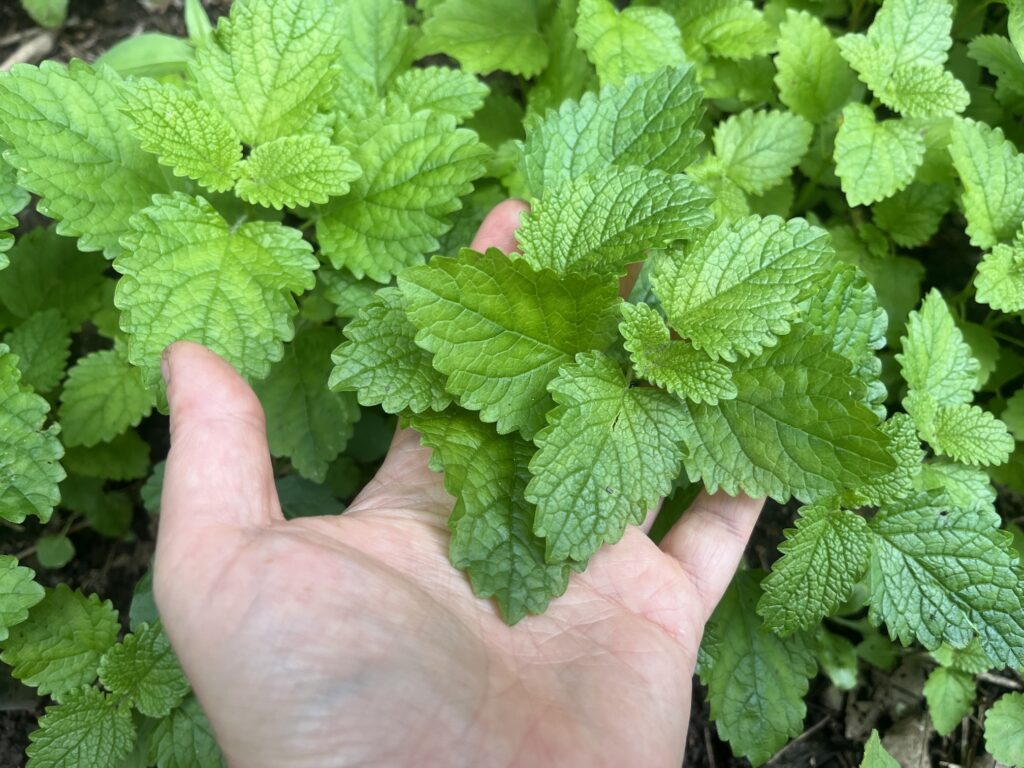
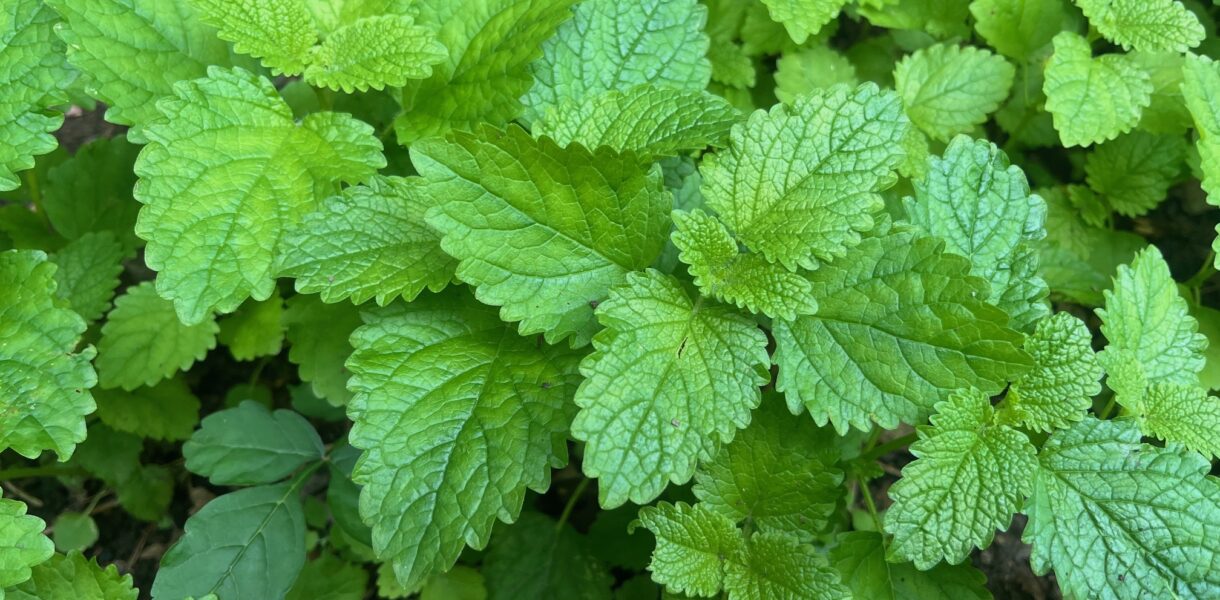
Lemon Balm – Melissa Officinalis
Lemon balm has a bright, lemony, sweet, and fresh scent that gently warms, disperses, relaxes, and is mildly drying. Lemon balm works primarily on the nervous system, the digestive system, and the cardiovascular system as a nervine relaxant, carminative, anti-spasmodic, diaphoretic, and with some mild antiviral properties. Lemon balm makes an amazing tea, herbal steam, and all around long-term and nourishing plant ally.
When you crush lemon balm in your hand or brew as a tea, you are struck immediately with a sense of calm and focus. Take a moment to breathe in the scent of the lemon balm, and you can literally feel your body relaxing. This is because lemon balm relaxes the body while also simultaneously creating movement and dispersing stagnation in multiple body systems. In the nervous system, lemon balm can reduce nervous tension, mental fog, and produce a calmer state of being. This helps you be more clear, focused, and able to get things you want to get done. Lemon balm in the digestive system helps relax any tension that peristalsis (food movement through the GI) can happen more smoothly–while also having an anti-spasmodic action, which is good when you have stomach cramps.
Ginger – Zingiber officinale
Ginger is a hot, pungent, spicy, and dispersive herb that many of us know more as a food herb than a medicine—but this aromatic plant is a medicinal treasure trove. The primary energetics of ginger are hot, stimulating, moving, dispersing and drying. Ginger works on the digestive, circulatory, respiratory, and nervous systems with herbal actions that include being a circulatory stimulant, carminative, diaphoretic, anti-emetic, anti-spasmodic, and anti-inflammatory.
Ginger is a wonderful example of an aromatic herb that creates movement by stimulating activity while also relaxing tension and spasm. In the digestive system, ginger stimulates digestive activity and helps move food and digestive contents through the gastrointestinal tract. At the same time, it can relax smooth GI muscle and reduce cramping, allowing peristalsis to occur more effectively. This makes ginger particularly useful when digestion is cold, sluggish, stagnant, or constricted. Its carminative action also helps move trapped gas and reduce the sense of abdominal fullness and stagnation, while its anti-emetic quality can help you when you are feeling nauseous.
In the circulatory system, ginger is also warming and stimulating—creating more peripheral circulation and helping move cold, stagnant, or congested tissues. This often will increase the sweat response, where fluid is moved from the interior toward the skin and then released through perspiration. In the respiratory system, ginger again stimulates the respiratory tract and help move and clear mucus from the respiratory passages—dispersing and drying out a damp, congested lung situation.
Thyme – Thymus vulgaris
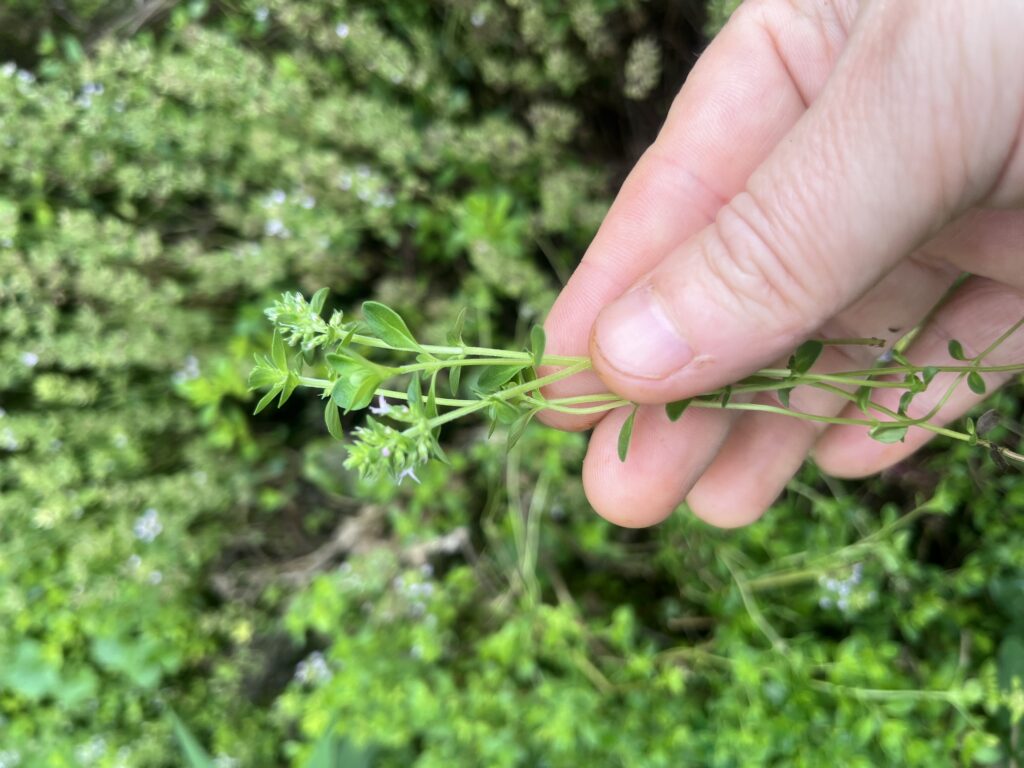
While many people think of Thyme as a gentle garden herb, Thyme is a medicinal powerhouse and is one of my favorite medicinal herbs, not only showing up in my chicken soup but also in many of my herbal preparations—especially steam inhalations, herbal smokes, and teas. Thyme has a strong, warm, penetrating, and slightly spicy aroma that stimulates, warms, disperses, dries, and clears. Thyme works primarily on the respiratory, digestive, circulatory, and immune systems and has antimicrobial, expectorant, antispasmodic, carminative, diaphoretic, and stimulating actions.
I find Thyme to be a more clearing and drying aromatic than either lemon balm or ginger. Thyme has a particularly strong action on the respiratory system, where Thyme has long been used to stimulate the respiratory tract and help break up and expel stuck mucus, reducing the imbalance of cold, damp, congested respiratory conditions. Thyme is also strongly antimicrobial against a wide range of different microbes, which can help fight lung infections. Some recent research has even demonstrated thyme to help fight both lung inflammation and lung cancer[2].
Thyme also has a carminative and anti-spasmodic effect on the digestive system, again demonstrating the stimulating and relaxing action. Thyme stimulates digestive activity by reducing tension, which allows gas and partially digested food to better move through the system. Like Ginger and Lemon Balm, Thyme also has a warming diaphoretic action, which increases peripheral circulation and encourages sweating.
We hope you enjoyed this exploration of aromatic plants and their medicinal virtues! You might be interested in joining us for our upcoming Aromatics Herbalism Weekend where we will explore many aromatic plants and some more unconventional preparations: essential oils, hydrosols, smoke blends, incense, and smoke sticks.
[1] See here for this overview: https://pmc.ncbi.nlm.nih.gov/articles/PMC10180368/